|
Getting your Trinity Audio player ready…
|
The Italian-Moroccan artist wrote ALTER EGO in London before recording its music. The process runs against the speed of the modern release cycle, but whether taking longer produces better music remains an open question.
YaT0’s next album began with writing.
For four years, while living in London, the Italian-Moroccan artist worked on lyrics, sequences and the narrative structure that would eventually become ALTER EGO. The production came later. Rather than starting with an instrumental and writing into it, he developed the words first and built the music around them.
It is an unusual order of operations at a time when the distinction between songwriting and production has become increasingly blurred.
A song can now begin with a producer’s beat, a sample, a loop or a vocal fragment. The writing is often shaped around whatever exists in the session. That is not necessarily a new development, but the speed at which music can be produced, distributed and promoted has made it increasingly normal. Songs can move from an idea to a finished release in a matter of days.
YaT0’s process has taken considerably longer.
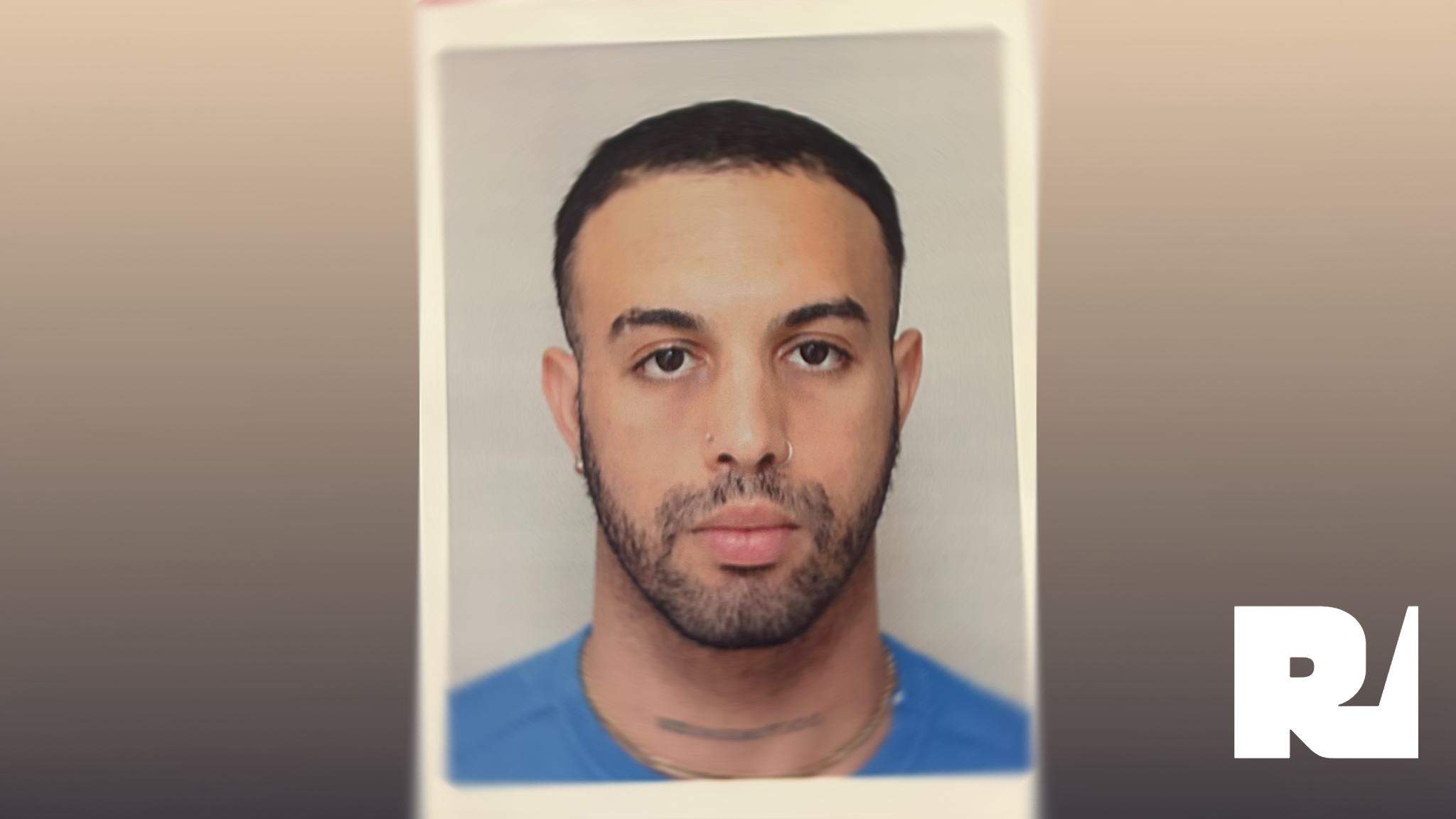
Born Yassine Touzani in Lombardy, Italy, on 23 June 1995, he has worked independently and developed ALTER EGOlargely outside the usual machinery surrounding a major release. The album was written before its recording sessions, giving the project a fixed starting point in language rather than production.
That does not necessarily make the method better.
It does make the difference easier to identify.
The decision to write first also places more importance on the words. If a producer establishes the atmosphere before the lyrics exist, the writing has to occupy a space that has already been created. In YaT0’s case, the production has to respond to material that already has its own structure and intention.
The distinction is central to the way he describes the project.
London was where the writing happened
YaT0 arrived in London without an established network and without fluency in English. He eventually developed a close circle of Irish friends, but the album was made largely away from the more visible parts of the city’s music industry.
London is a familiar setting for this kind of story. The city has long attracted musicians from outside Britain, offering studios, collaborators, venues and access to an international audience. But the presence of an industry does not mean that every artist entering the city becomes part of it.
For YaT0, London appears to have provided more time than access.
The city is not presented as the subject of ALTER EGO. It was the place in which the album was written.

That distinction matters because the record’s development was not tied to a conventional cycle of singles, promotion and release. The writing could continue while the project remained largely outside public view.
That is increasingly difficult for musicians to do.
The release of music is now closely connected to an artist’s visibility between releases. Social platforms give musicians a way to preview songs, document recording sessions and maintain an audience while a project is being made. For artists operating without major-label support, that visibility can be particularly valuable.
It can also create a different kind of pressure: the expectation that something should always be happening in public.
YaT0’s process has largely separated the making of the album from that expectation.
For four years, there was no finished record for an audience to judge.
The languages are part of the structure
YaT0 works across Italian, Arabic, Spanish and English, although the languages do not carry equal weight within ALTER EGO. Italian forms the central narrative, while the others appear when they offer a different emotional or expressive function.
That approach is consistent with an album that begins with language.
The choice of language is not only a question of audience. It can alter the sound of a line, its cultural associations and the relationship between the person writing and the person being addressed. For an artist raised in Italy with Moroccan roots who later moved to an English-speaking city, those distinctions are part of the material.
But multilingualism is not, on its own, evidence of artistic depth.
The more relevant question is whether the shifts serve the songs.
That will ultimately be determined by the recordings rather than the biography behind them.
For now, the significance is more practical: YaT0 has treated language as one of the organising principles of the album rather than something fitted around pre-existing production.
The writing came first. The music had to follow.
Four years is a long time
The length of ALTER EGO‘s development is perhaps its most conspicuous feature.
YaT0 has allowed songs to remain unfinished for extended periods, with the project judged against a question of whether the material would continue to feel truthful years after it was written.
That is difficult to reconcile with the usual economics of music.
There is a practical advantage to releasing regularly. New songs create opportunities for streaming, press, performances and social-media activity. For independent artists in particular, remaining visible can be part of maintaining an audience.
Waiting can have consequences.
An artist who spends four years on a record is also spending four years without knowing whether the eventual album will justify the time. There is no guarantee that a song improves simply because it has been given longer to develop. Some ideas become clearer with distance. Others lose their urgency.
Time can edit a song.
It can also simply delay it.
That is why the four-year process should be treated as a fact about ALTER EGO, rather than evidence of its quality.
The record still has to make the case for itself.
Kane extends the project beyond the music
Alongside the album, YaT0 has been developing Kane, a fashion and creative-direction project that has grown at the same time as the music.
The two are not being treated as entirely separate stages of an album campaign. Kane has developed alongside ALTER EGO, allowing the visual direction and the music to influence one another while both projects remain unfinished.
That is different from the more familiar promotional sequence in which an album is completed first and the visual identity is constructed around it.
It also reflects the broader way YaT0 has approached the project. The album is being considered as a collection of connected decisions — writing, sequence, production and visual language — rather than simply a group of songs waiting to be released.
Whether that approach produces a more coherent record is something the finished album will have to establish.
The process is not the product
There is an obvious temptation to turn YaT0’s four-year writing period into the story itself.
It makes for a useful contrast with an industry that moves quickly. It gives ALTER EGO a narrative before the audience has heard the music. And it provides an easy way to position an independent artist against the commercial pressures of contemporary pop.
But the process has limits as a story.
Four years is not inherently more serious than four months. Working independently does not automatically produce more interesting music. Writing in several languages does not guarantee stronger songwriting. And keeping a record private does not make it more important once it becomes public.
Those things describe how ALTER EGO was made.
They do not tell us whether it works.
That distinction is especially important because YaT0 has built the album around a standard of durability. The aim is for the writing to retain its meaning beyond the circumstances in which it was created.
There is no way to test that before release.
Once the record is finished, the songs will have to function without the explanation of how long they took to make. The lyrics will have to work with the production. The sequencing will have to justify the album’s larger narrative. The different languages will have to make sense within the music rather than simply within the artist’s biography.
The four years will disappear into the recordings.
That may be the fairest test of the method.
YaT0 has chosen to make ALTER EGO slowly, in an environment where music is increasingly made and released quickly. He has put writing ahead of production and kept much of the process away from the audience.
There is nothing inherently virtuous about that choice.
But it raises a reasonable question about the way music is made now: when artists are encouraged to release constantly, what happens when one decides that the work can wait?
ALTER EGO will eventually provide an answer.
Not through the story of its making, but through the music itself.


Leave a Reply